Front cover
See the original page artwork

SELFISH
P.O.S.
(43 lessons in business and hospitality
learned the hard way, taught confidently by someone who definitely had his shit together the whole time.)
Demetri Gregorakis
Four introductory excerpt pages and one complete sample lesson from each section. This simple sample works without JavaScript. Artwork and text may change before publication.
SELFISH
P.O.S.
(43 lessons in business and hospitality
learned the hard way, taught confidently by someone who definitely had his shit together the whole time.)
Demetri Gregorakis

SELFISH
P.O.S.
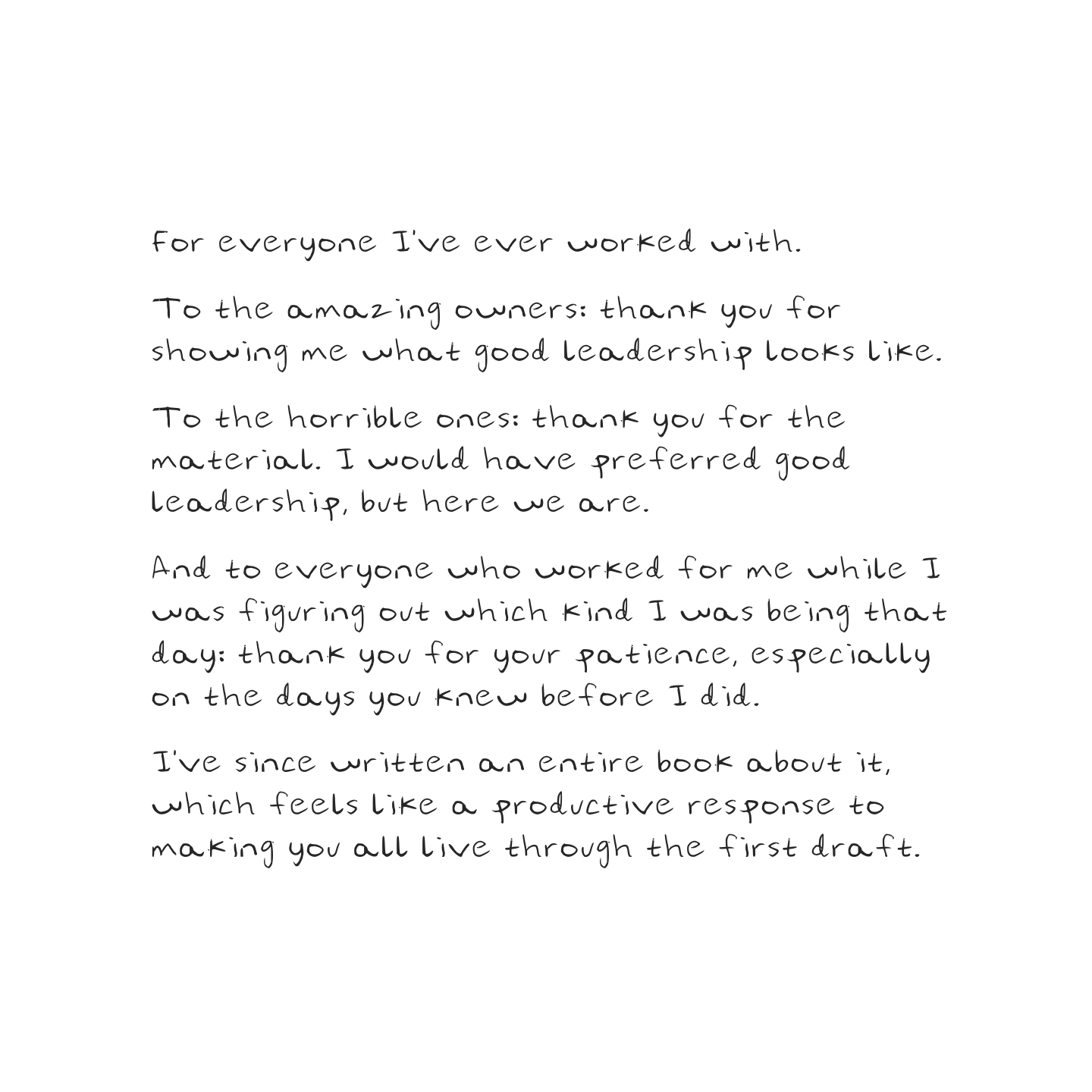
For everyone I’ve ever worked with.
To the amazing owners: thank you for showing me what good leadership looks like.
To the horrible ones: thank you for the material. I would have preferred good leadership, but here we are.
And to everyone who worked for me while I was figuring out which kind I was being that day: thank you for your patience, especially on the days you knew before I did.
I’ve since written an entire book about it, which feels like a productive response to making you all live through the first draft.
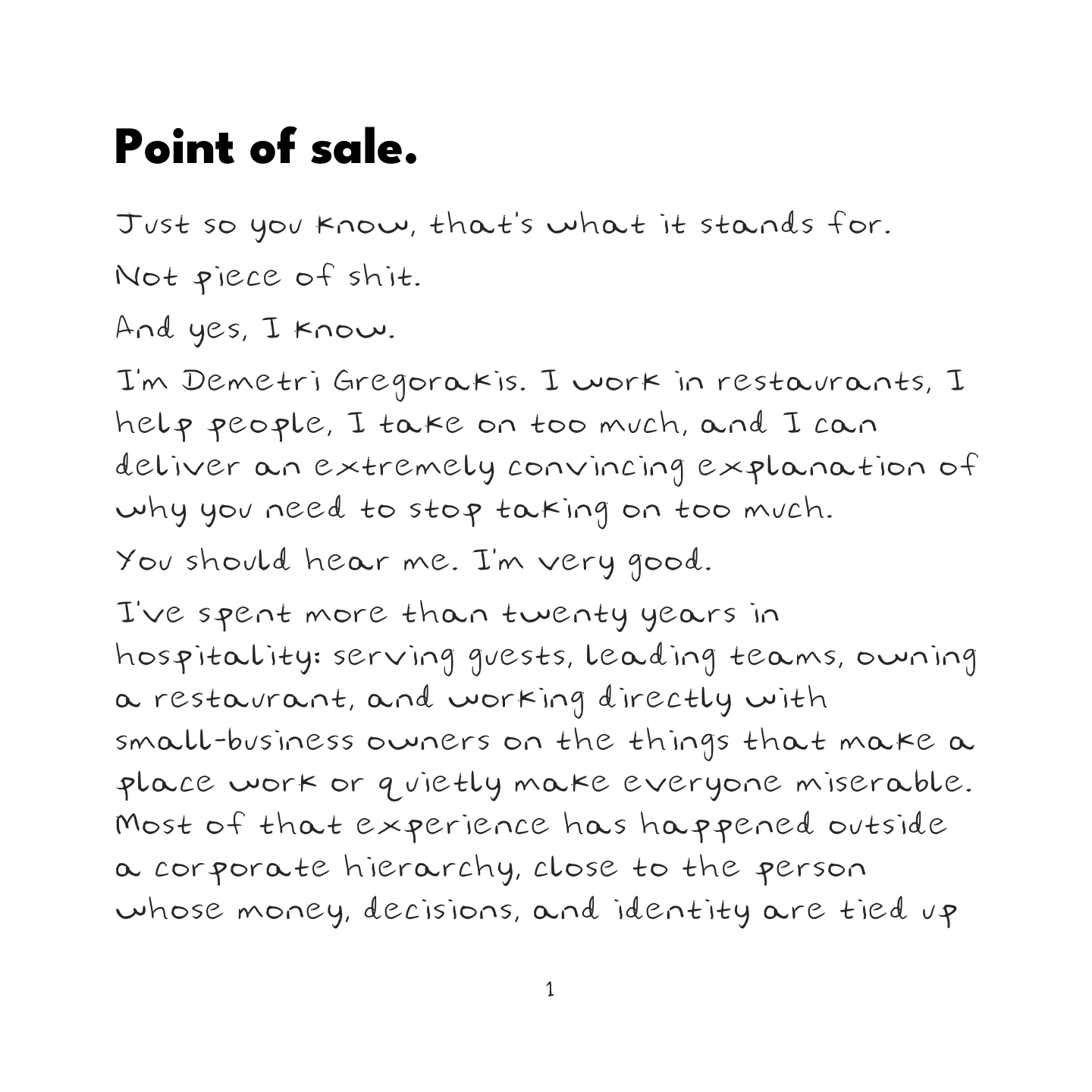
Point of sale.
Just so you know, that’s what it stands for.
Not piece of shit.
And yes, I know.
I’m Demetri Gregorakis. I work in restaurants, I help people, I take on too much, and I can deliver an extremely convincing explanation of why you need to stop taking on too much.
You should hear me. I’m very good.
I’ve spent more than twenty years in hospitality: serving guests, leading teams, owning a restaurant, and working directly with small-business owners on the things that make a place work or quietly make everyone miserable. Most of that experience has happened outside a corporate hierarchy, close to the person whose money, decisions, and identity are tied up
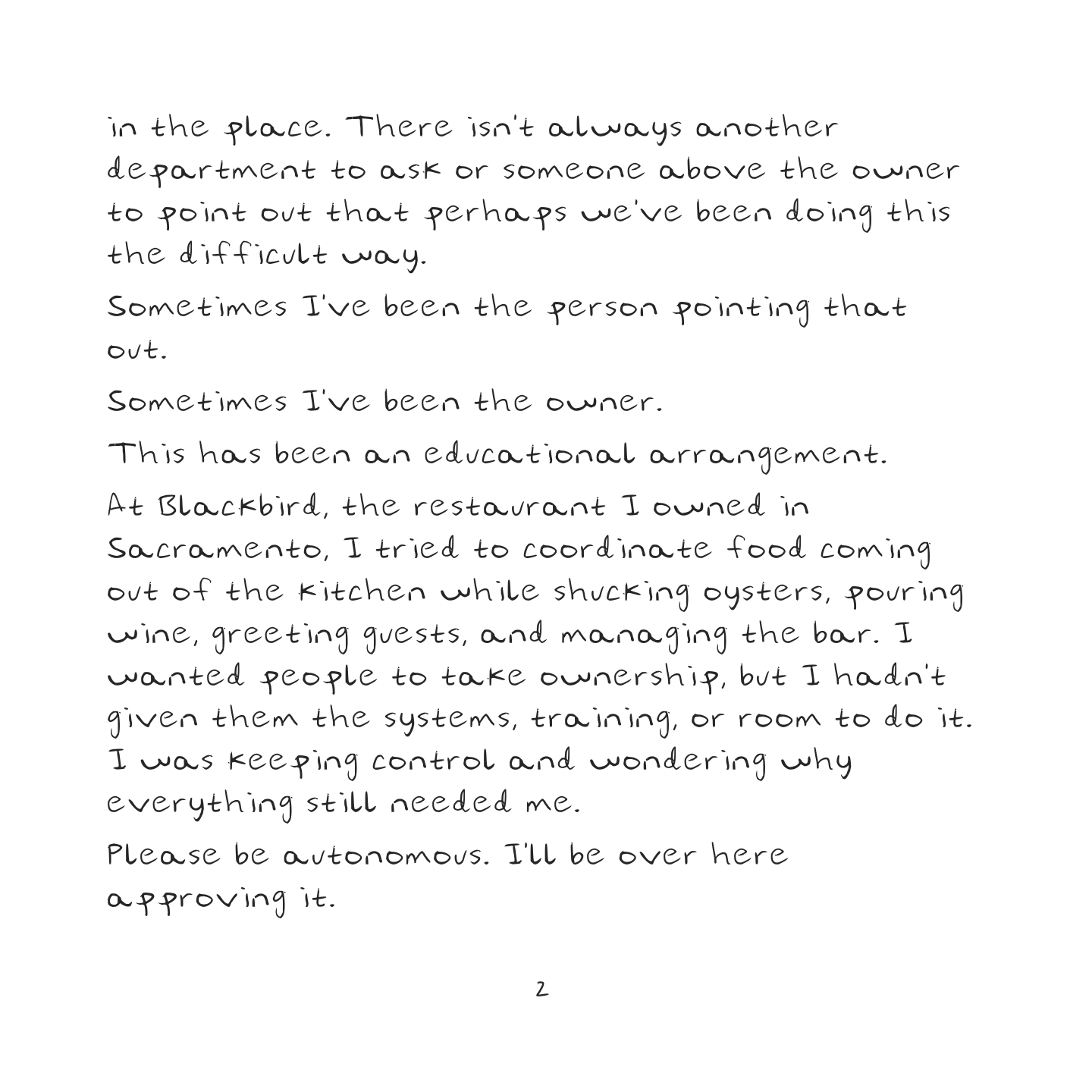
in the place. There isn’t always another department to ask or someone above the owner to point out that perhaps we’ve been doing this the difficult way.
Sometimes I’ve been the person pointing that out.
Sometimes I’ve been the owner.
This has been an educational arrangement.
At Blackbird, the restaurant I owned in Sacramento, I tried to coordinate food coming out of the kitchen while shucking oysters, pouring wine, greeting guests, and managing the bar. I wanted people to take ownership, but I hadn’t given them the systems, training, or room to do it. I was keeping control and wondering why everything still needed me.
Please be autonomous. I’ll be over here approving it.
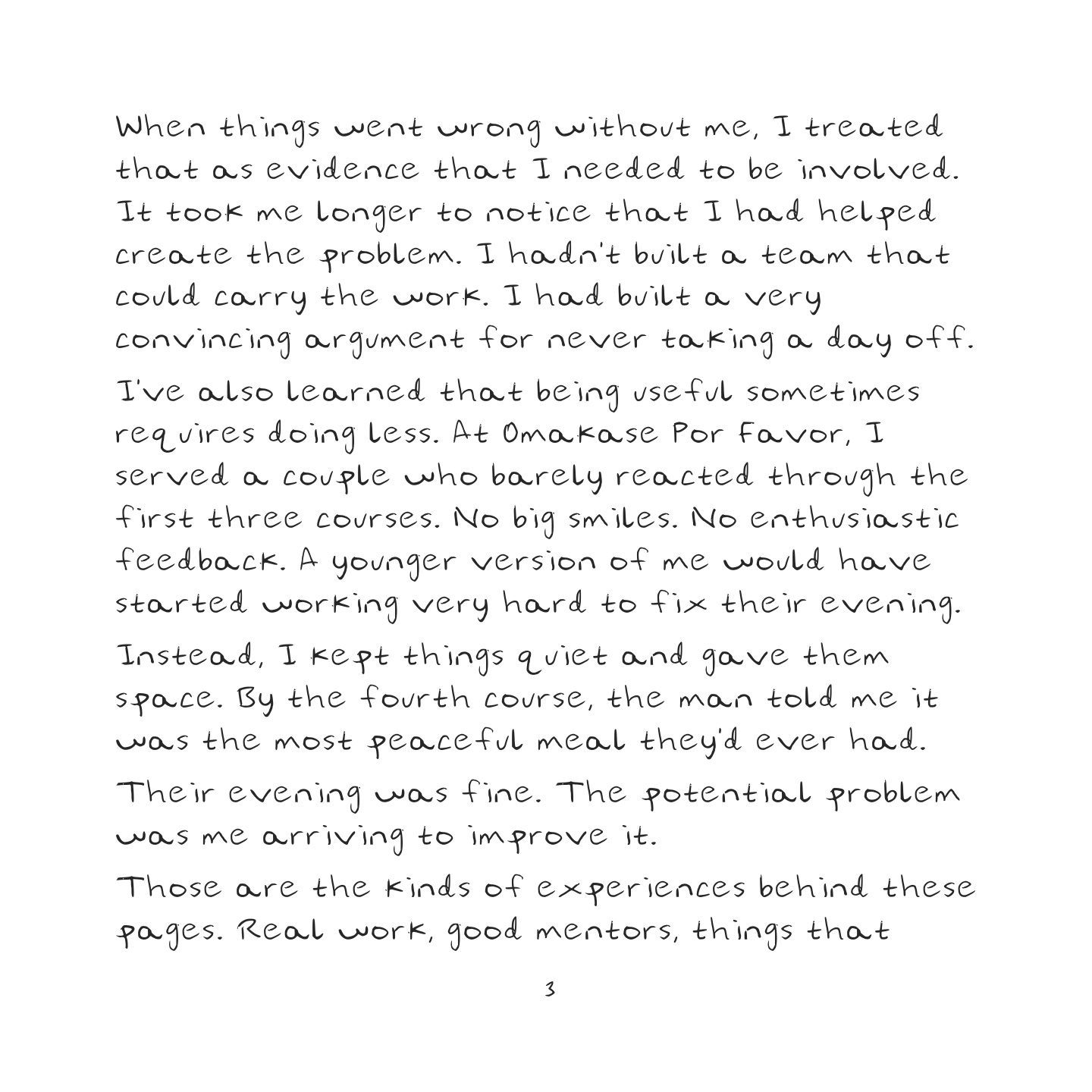
When things went wrong without me, I treated that as evidence that I needed to be involved. It took me longer to notice that I had helped create the problem. I hadn’t built a team that could carry the work. I had built a very convincing argument for never taking a day off.
I’ve also learned that being useful sometimes requires doing less. At Omakase Por Favor, I served a couple who barely reacted through the first three courses. No big smiles. No enthusiastic feedback. A younger version of me would have started working very hard to fix their evening.
Instead, I kept things quiet and gave them space. By the fourth course, the man told me it was the most peaceful meal they’d ever had.
Their evening was fine. The potential problem was me arriving to improve it.
Those are the kinds of experiences behind these pages. Real work, good mentors, things that
went well, and things I have had plenty of time to reconsider. Some lessons arrived gently. Others were expensive, awkward, embarrassing, frustrating, or funny considerably later than I would have preferred.
My first book, Selfish Hospitality, was my first attempt to put that experience into a book. It’s a memoir, starting with the kid arranging a pretend restaurant in his grandparents’ basement and following what happened when hospitality became my work, my identity, and occasionally far too much of both. It explores why taking care of people matters so much to me, and what it took to learn that I was also a person who needed taking care of.
This book brings that experience into 43 practical lessons for hospitality workers, small-business owners, and the people leading alongside them. There are things here about
End of introduction excerpt. The introduction continues in the full book. Next: Lesson 1 · The Day Off With A Charger.
PRESERVATION OF SELF 01 / 43
THE DAY OFF WITH A CHARGER
I would like you to have a day off. An actual one. Ideally, the restaurant will survive without receiving your thoughts on napkins from a park bench.
This is where the flattering part of the brain gets involved. Everybody needs me. I am essential. Look at these messages. What a beautiful collection of evidence that I haven't handed anything over properly.
Picture Nia, our fictional restaurant owner. She packs a book, sunglasses, and two chargers. By three, she's approved a delivery, answered six routine questions, and experienced fourteen seconds of leisure.
Her manager, Sam, checks the messages afterward. Most needed a spending limit, a supplier number, or permission to make a reasonable decision. One needed her. The napkins did not.
PRESERVATION OF SELF 01 / 43
Before her next day off, they agree on what Sam can decide, where the information lives, and what counts as an emergency. Nia's assignment is uncomfortable: let him actually do it.
That's the part I want you to notice. Giving someone responsibility while keeping every decision is an efficient way to exhaust two people.
Set the limits. Provide the tools. Agree on when to check in. Then step away long enough for the arrangement to become real. You're allowed to be useful without being permanently reachable. The napkins will have to develop some resilience.
Hand over three routine decisions with clear limits and support. Test the arrangement during one protected hour away. Resist the urge to supervise the hour.
End of sample lesson. This complete lesson is part of a larger section. Next: Lesson 9 · I Already Told Everyone, Apparently.
PREVENTION OF SURPRISES 09 / 43
I ALREADY TOLD EVERYONE, APPARENTLY
I have explained the change. I remember explaining it. This gives me a very convincing argument for being annoyed when nobody seems to know.
Unfortunately, remembering the announcement doesn't tell me who received it, which version they saw, or whether it reached the actual work. There are several irritating follow-up questions.
Picture Nia, our restaurant owner, announcing new closing hours in a group chat. The message lands between a leaking-faucet photo and an investigation into an elderly food container. Bea, a server, is off. Kit, the host, sees the old booking-page hours. Luis, the chef, follows the printed schedule.
Everyone has a source. This is somehow worse than nobody having one.
PREVENTION OF SURPRISES 09 / 43
Sam, the manager, creates one current notice with an effective date. They correct guest-facing information, brief affected shifts, and check that the schedule agrees. Staff can review the change during paid work time.
I want important changes to have a clear home and a reliable route to the people affected. Remove conflicting instructions. Explain what changes in the next shift. Check understanding where the consequences matter.
Repeating yourself can be useful. Making people choose between three apparently official answers is a different activity. Let's spend a little less time proving the message was sent and a little more making sure it arrived.
Check one recent operational change. Correct old versions, name the current source, and ask the affected people what they will do differently during their next shift.
End of sample lesson. This complete lesson is part of a larger section. Next: Lesson 16 · Welcome. Where Does My Coat Go?.
PRINCIPLES OF SUPPORT 16 / 43
WELCOME. WHERE DOES MY COAT GO?
?
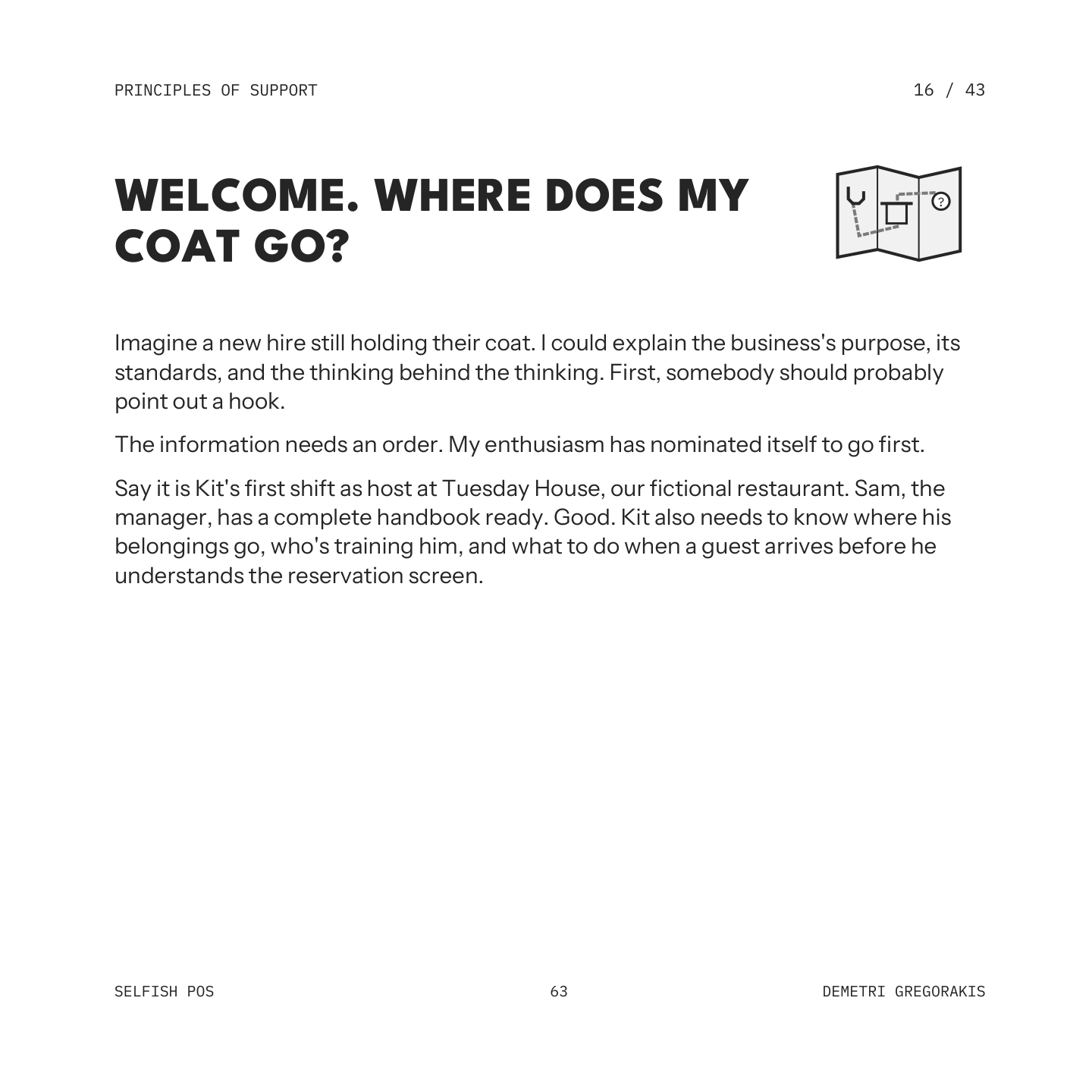
Imagine a new hire still holding their coat. I could explain the business's purpose, its standards, and the thinking behind the thinking. First, somebody should probably point out a hook.
The information needs an order. My enthusiasm has nominated itself to go first.
Say it is Kit's first shift as host at Tuesday House, our fictional restaurant. Sam, the manager, has a complete handbook ready. Good. Kit also needs to know where his belongings go, who's training him, and what to do when a guest arrives before he understands the reservation screen.
PRINCIPLES OF SUPPORT 16 / 43
I'd make the first day small enough to succeed at. Introduce the people, cover required safety training, explain the immediate tasks, and give a named trainer enough time to teach.
Demonstrate a simple arrival. Let Kit practice with supervision. Check what he understands without making uncertainty embarrassing.
Then show him the plan for what comes next. Everything doesn't need to fit into the first morning to count as thorough preparation.
I want a new person leaving with a few useful skills and a clear route to help. Remembering my entire explanation of hospitality can wait. Knowing whom to ask about table six cannot.
Walk through a new hire's first day. Name the trainer, required safety instruction, first skill to practice, and available help. Protect time for teaching and questions.
End of sample lesson. This complete lesson is part of a larger section. Next: Lesson 23 · Ask Before You Solve It.
PRACTICE OF SERVICE 23 / 43
ASK BEFORE YOU SOLVE IT
Give me a small amount of information and I can produce a very detailed interpretation. I care about being helpful. Occasionally, I should check whether the problem I've so thoughtfully solved is the one anybody has.
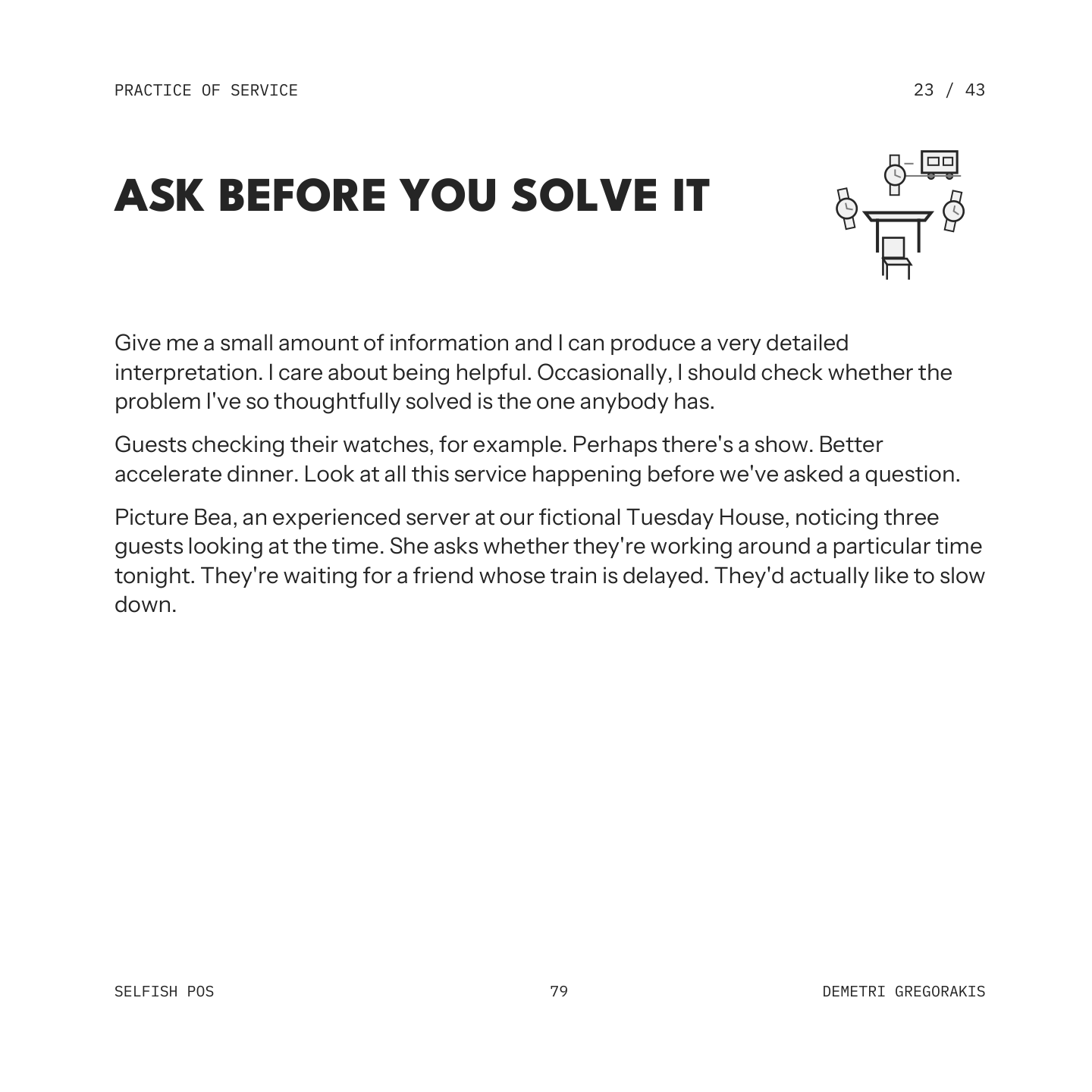
Guests checking their watches, for example. Perhaps there's a show. Better accelerate dinner. Look at all this service happening before we've asked a question.
Picture Bea, an experienced server at our fictional Tuesday House, noticing three guests looking at the time. She asks whether they're working around a particular time tonight. They're waiting for a friend whose train is delayed. They'd actually like to slow down.
PRACTICE OF SERVICE 23 / 43
Bea confirms what they want now and agrees how to pace the meal when their friend arrives. My entire imagined theater itinerary can quietly retire.
Observation gives you a place to begin. A glance at the door, an untouched plate, or a coat still on can suggest a need without identifying it.
Ask a short, useful question and listen to the answer before deciding what help looks like.
I want the team noticing details and updating first impressions. Attentiveness works better when the actual guest gets some influence over the considerate evening we're arranging for them.
Choose one guest cue during service. Ask a brief question to check its meaning, then adjust the pace or support to what the guest actually tells you.
End of sample lesson. This complete lesson is part of a larger section. Next: Lesson 30 · The Bank Balance Is Being Selective.
PROFIT OVER SALES 30 / 43
THE BANK BALANCE IS BEING SELECTIVE
A healthy-looking bank balance can be very reassuring. Especially if we agree not to interrupt it with questions about payroll, tax, rent, or the invoices quietly awaiting their moment.
I would enjoy that arrangement. I wouldn't recommend running a business on it.
Picture Nia, our fictional owner, checking the account after a busy weekend and considering new patio furniture. Her bookkeeper asks what is already owed, what's expected to arrive, and when the next payments fall due. The available money becomes less available with every answer.
They build a cash forecast and review the profit and loss statement. These answer different questions. The furniture remains in an open browser tab, where it is doing very little harm.
PROFIT OVER SALES 30 / 43
I want you to know what each number can tell you. Cash planning helps show whether funds will be there when obligations fall due. Profit reporting describes results over a period, subject to the accounting method. Neither automatically explains every commitment, delay, or missing entry.
Review both regularly with whoever keeps your books. Ask the questions you need to ask. Looking competent for ten minutes is a poor exchange for staying confused about your own money.
You don't have to become an accountant. You do need enough understanding to know what you're deciding and what still requires an explanation.
Review expected receipts, payments, and committed funds for the coming weeks with your bookkeeper before deciding what money is available for a new purchase.
End of sample lesson. This complete lesson is part of a larger section. Next: Lesson 37 · Please Relax The Lettuce.
PROGRESS OVER STALLING 37 / 43
PLEASE RELAX THE LETTUCE
At some point, a photograph needs to show someone something useful. Before that point, it can become an excellent place to put all the uncertainty I haven't managed to resolve elsewhere.
Is the angle right? Too staged? Not staged enough? What does the napkin suggest about the company?
Picture Nia, our fictional owner, photographing a sandwich for twenty minutes. She asks Luis, the chef, whether the lettuce could look more relaxed. He suggests letting it sit down.
Bea, a server, checks the pictures. A dish towel dominates the foreground. The filling is barely visible. They try good light, a cleaner background, and an honest view of the food. It looks appetizing and recognizably theirs. They don't include identifiable people without appropriate permission.
PROGRESS OVER STALLING 37 / 43
I want enough care to make the image clear, then enough confidence to let it exist. Show the part a guest would actually care about. Check the details. Test what works for your audience instead of assuming every fashionable style belongs to your restaurant.
Real moments can be useful without becoming careless content. Thoughtful presentation doesn't require a full production or an afternoon of negotiations with salad.
Take the picture. Look at it as a guest. Does it help them understand why they might want the sandwich? Good. We can work with that.
Photograph one item clearly in good light. Show useful detail honestly, remove distracting clutter, and get appropriate permission before publishing identifiable people.
End of sample lesson. This complete lesson is part of a larger section. Next: Back cover.

OPEN ANYWHERE.
I WON'T CHECK.
You can care about the guests, support your team, run a decent business, and occasionally sit down.
A radical proposal. Please remain calm.
Inside are 43 short lessons about people, service, money, decisions, and the impressive number of jobs an owner can accidentally give themselves. Each lesson stands on its own, with a story, a useful idea, and one thing to try.
Open anywhere. Laugh in recognition. Make one part of the work a little better.
You do not have to read this in order. I have enough concerns without supervising that.
Wondering what qualifies me to give this advice? Fair question. The intro has answers. Allegedly.
selfishpos.com
@selfishhospitality